Feb 21, 2024
Welcome to bfdentalsociety.org, the new website for the Benton-Franklin Counties Dental Society!

Feb 21, 2024
For almost seven years now, Dr. Brittany Dean has traveled to Alaska once a month to spend a week treating pediatric patients in that state’s most rural and underserved communities.
Working in remote villages and towns like Kake and Sitka, Dean has seen patients face practical and geographic challenges in accessing routine oral health care services. Resources are limited, and care is often delayed simply because there are not enough providers to see patients on a regular basis.
To meet the dental workforce shortage in the state, Alaska allows what are known as Preventive Dental Health Aides (PDHAs) to offer limited care and treatment until a dentist or hygienist is available locally. As a locum tenens to the Southeast Alaska Regional Health Consortium or SEARHC, Dean is often partnered with a PDHA who performs a limited array of dental work, including cleanings above the gumline with scalers and polishers.
“I’ve been lucky to have those assistants with me on my visits. I think it’s nice because the alternative is waiting to see a hygienist,” said Dean, WSDA’s president-elect. “There can be care delays when providers must travel to remote areas. Preventive Dental Health Aides can boost what dentists are able to complete.”
When she returns to Seattle, Dean resumes her work locally, splitting time between Bellevue Pediatric and Seattle Special Care Dentistry. Surprisingly, the same workforce challenges she experiences on the outskirts of Alaska also exist in some of Washington’s most populated cities.
This past January, Dean testified before the Senate Health & Long-Term Care Committee regarding the benefits of easing the dental workforce shortage by adding a new category of dental care provider in Washington state: the Preventive Expanded Function Dental Auxiliary or P-EFDA. These providers would work under a dentist’s supervision to increase office efficiency by providing preventive care to healthy patients.
“I’ve seen first-hand how important that position can be in building access to timely preventive care,” said Dean. “In my experience, many Alaskans enjoy better oral health than they would otherwise because PDHAs are available to deliver timely preventive care. I’d like to see those same benefits accrue to adults and children here in Washington. While those benefits would be felt statewide, I believe they would be felt most prominently in some of the more remote areas and in underserved, low-income, and diverse communities of Washington,” she added.
“Creating this new position could help these patients save time, reduce travel expense in finding care, and mitigate the risk of greater pain, infection or other health complications.”
With any luck, Dean’s hope could soon become a reality through WSDA’s advocacy efforts in Olympia.
In the 2026 legislative session, Senate Bill 6146 was introduced to authorize the P-EFDA in Washington state. Under the proposal, P-EFDAs would be licensed to provide “dental prophylaxis for patients in a healthy oral state” as defined by the dental commission with consultation from the dental hygiene examining committee.
A December 2025 study from the University of Washington Center for Health Workforce Studies [see callout] lends strong support for the addition of P-EFDAs. The research examined the potential for what the study referred to as perio EFDAs — a preventive EFDA, as opposed to the restorative EFDA that already exist in our state — to improve preventive care at Indian Health Service (IHS) Facilities. In the IHS model, perio EFDAs can scale teeth to remove all visible plaque and calculus. The study included a review of academic research literature as well as interviews with dental professionals familiar with the model in other states.
Among the study’s key findings: authorizing this new type of provider could serve as an effective strategy for reducing workforce shortages, increasing access to care and avoiding the serious problems that result from delays in preventive care. Their conclusion was clear: “Employing perio EFDAs helped to increase patient access to routine preventive services and allowed dentists, dental hygienists, and dental therapists (where applicable) to deliver more services at the top of their scope of practice.”
During the Senate work session this past January, Dean emphasized the benefits this new position could generate for patients in Washington state. She also emphasized what the position would not do: supplant the work of dental hygienists.
“[The P-EFDA position] is intended to expand access to routine preventive care services so that hygienists may focus a greater percentage of their time on the more complex care they have been trained to provide,” she said.
P-EFDA discussions will continue in the next legislative session.
“We are trying to tackle this problem from every angle. It’s frustrating and it’s been a major pain point for dentists and patients for a long time,” said Dean.
“We are working to increase programs. We are part of the compact to make it easier for hygienists to relocate to our state. And it does make a difference when our members speak to their legislators and respond to call to action,” she added.
“Hopefully things will be different next year.”

WSDA Advocacy Director Kevin Schilling emphasized that the proposal to create the P-EFDA position in Washington is not intended to supplant the important contributions made by dental hygienists.
“Dental hygienists are essential providers of preventive care, and WSDA has a long track record of working towards consensus on dental hygiene scope expansion when it makes sense. For example, Washington was one of the first states in the nation to enable dental hygienists to administer local anesthesia — something that has been a legislative battle in some other states for more than 50 years after it was adopted here,” said Schilling. “But the state simply doesn’t have and isn’t producing enough hygienists to meet patients’ needs. So, the P-EFDA model that’s used in other states, as well as in military and tribal care systems, can help address access gaps, especially among Medicaid and rural patients. This is about expanding capacity, not about redefining existing roles.”
Even before COVID, dentistry faced preventive workforce shortages that impacted oral health care for thousands of Washingtonians and providers.
But after COVID, the problem skyrocketed — and it persists to this day. Some hygienists retired after the stress that COVID placed on oral health care providers and practices. Others significantly pared back their hours. But more than five years after the pandemic, the state has still not produced enough hygienists to backfill those positions or keep pace with Washington’s growing population.
It is a problem dentists know all-too-well.
WSDA members consistently list the dental workforce shortage as one of the biggest challenges facing dental practices. According to surveys of WSDA and Washington Dental Hygienists’ Association members in 2021, there were more than four open hygiene positions for every hygienist that reported looking for a position — and the discrepancies were even more dire in rural areas of the state.
WSDA has been battling workforce issues on many fronts. In 2023, WSDA was successful in advancing a pair of bills designed to immediately address the shortages. House Bill 1466 extended the initial license period for hygienists moving into the state to complete Washington’s additional educational requirements. The law extends the previous licensing period from 18 months to five years, giving hygienists the opportunity to begin providing care to patients while they obtain additional education that Washington requires to obtain licensure.
That same year, a second measure was signed into law. House Bill 1287 removes the requirement that a hygienist in another state or Canadian province be actively practicing in order to qualify for an initial limited license when coming to Washington state.
“P-EFDAs help meet the immediate need for high quality, routine preventive care for some of our vulnerable populations."
The Dentist and Dental Hygienist Compact created through a third measure, House Bill 1576, enhances licensure portability, making it easier for dental professionals moving to Washington to begin practicing in the state. As of March 2026, nine states have enacted legislation to join Washington in the compact, including Colorado, Iowa, Kansas, Maine, Massachusetts, Ohio, Tennessee, Virginia and Wisconsin.
And while the compact and new Washington state laws will eventually help reduce the workforce shortage, patients are still in dire need of preventive care now, particularly in more rural corners of the state.
“We continue to make good progress on the workforce shortage, especially in the Legislature,” said WSDA President Dr. Lisa Egbert. “The Dentist and Dental Hygienist Compact, along with the hygienist licensing bills passed in 2023, are having a positive impact in terms of providing more opportunities for hygienists to enter the workforce in our state. But we know more must be done to provide consistent — and immediate — access to oral health care in all Washington communities.
“Our members recognize the tremendous value that hygienists bring to the care teams in their offices,” she continued. “That’s why we’ve worked so hard to expand the hygiene education pipeline in our state. But we’re still not keeping pace, and we need to take additional steps to improve patient access to preventive care services.”
“Creating a new category of dental provider — the Preventive Expanded Function Dental Auxiliary — is a proven way to meet that goal,” added Schilling. “P-EFDAs help meet the immediate need for high quality, routine preventive care for some of our vulnerable populations. They also free up hygienists to spend time on more complex care, which they have been trained to provide.”
The dental workforce shortage is a national challenge. Like Washington, other states are piloting ideas to create new dental care providers aimed at expanding access to services and easing the stress on busy hygienists.
In 2025, the Missouri Dental Association completed a pilot project of placing Oral Preventive Expanded Function Dental Assistants (OPA-EFDAs) in seven dental clinics around the state. The goal of the program was to see if OPA-EFDAs would create more appointment opportunities, improve access and reduce appointment wait times, especially in rural areas and in clinics that serve Medicaid-eligible patients. OPA-EFDAs in the Missouri pilot could remove supragingival calculus and perform coronal polish, oral hygiene instruction, and fluoride applications. The study found these EFDAs were well-trained, and their work was overseen by clinical supervisors.
By the conclusion of the pilot, OPA-EFDAs had delivered care to 1,626 healthy and gingivitis patients, earning stellar ratings. The clinical supervisors rated OPA-EFDA performance at 9.6 out of 10, which was interpreted as “excellent, strongly exceeds expectations.” More importantly, nearly 1,000 of the participating patients evaluated the care they received, and their average rating was even higher, at 9.7 out of 10. There were no reported adverse incidents, patient injuries, or patient complaints during the eight-month pilot project.
Missouri estimates that OPA-EFDAs would be eligible to help hygienists and dentists in treating healthy and gingivitis patients in somewhere between 21% and 33% of all clinic appointments, a significant improvement in access to preventive care.
Given that potential and the results of the pilot project, Missouri concluded that OPA-EFDAs practicing under the direct supervision of dentists and hygienists are a safe addition to the oral healthcare workforce. Their contributions will create more available appointments in dental clinics and significantly improve access to care.
On the heels of Missouri’s successful experience, the Virginia legislature passed legislation that creates a dental assistant II during its 2026 legislative session. A dental assistant II is similar to Missouri’s OPA-EFDA. The Virginia Dental Association relied on a Johns Hopkins study of the position in Indian Health Service facilities and the experience the state of Kansas has had with a “scaling assistant” allowed to polish and scale the teeth above the gumline. The Kansas experience further underscores the goal of adding P-EFDAs here in Washington: A State of Kansas audit found that their “scaling assistants” were augmenting the dental team, not replacing hygienists.
The creation of the Preventive Expanded Function Dental Auxiliary will take more than just legislative approval. If legislation is enacted, it would direct the Dental Commission to develop specific education and licensing requirements for assistants looking to move up the career ladder into a P-EFDA position. Rules will need to be developed for oversight of the care provided by P-EFDAs. Additional training resources may have to be created so that assistants can develop the skills they will need to safely deliver this care.
WSDA leaders like Dean believe it will be worth the effort. If created, the position stands to have a significant positive impact on underserved communities around Washington state.
She says that WSDA has done a good job conveying the message that there are persistent workforce shortages among hygiene and assistants, and that it’s affecting patient care.
Still, more work remains to be done.
“In my mind, there’s only so many things you can do to address this problem, and we are trying all of them,” said Dean.
A December 2025 study from the UW Center for Health Workforce, funded with the assistance of WSDA, examines the potential impact of the Expanded Function Dental Assistant-1, also referred to as the perio EFDA. The study yielded several key findings, including:
Read the full study here.
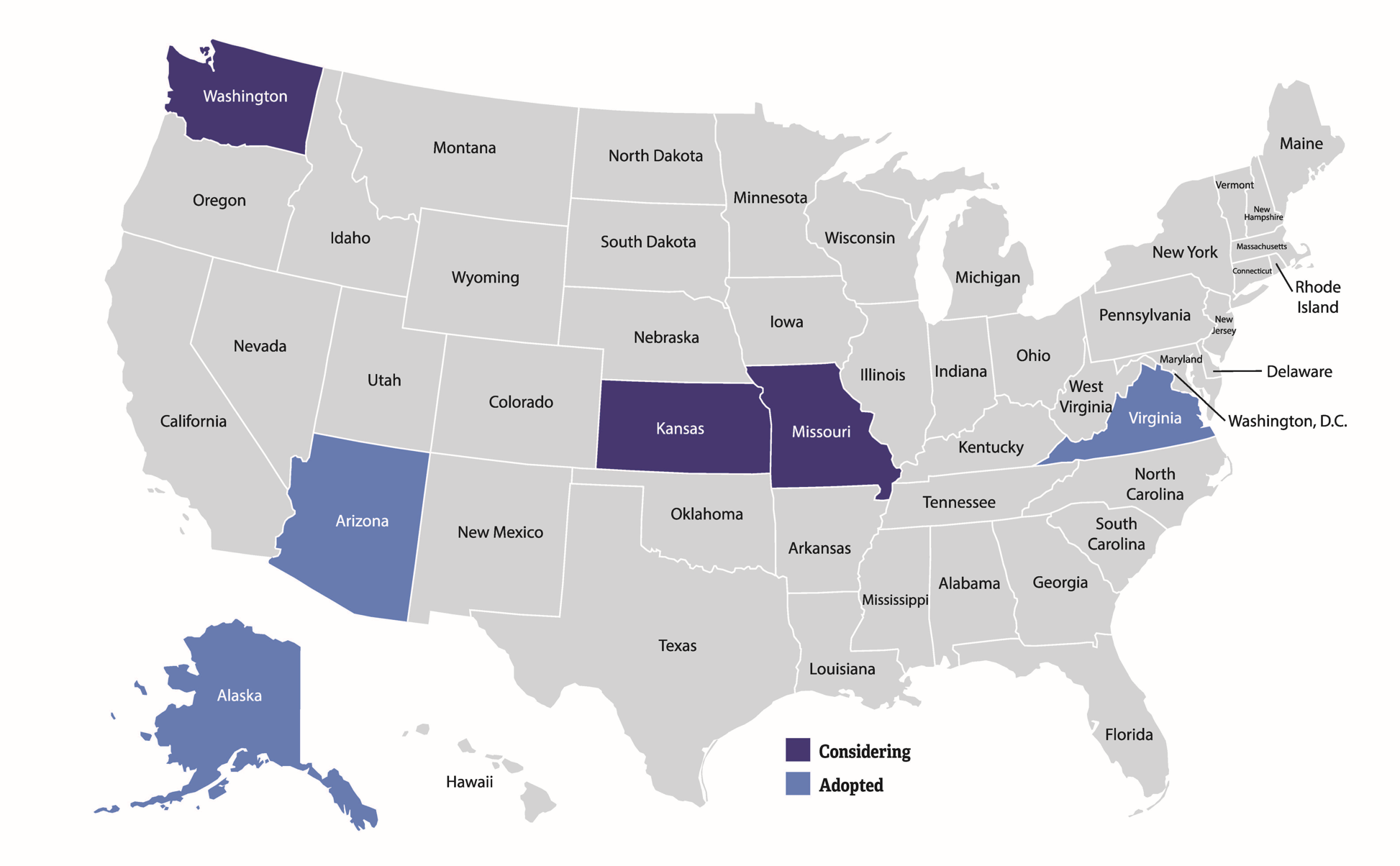
This spring, Virginia joined Alaska and Arizona in adopting a form of EFDAs to address their dental workforce shortages. States considering similar actions include Missouri and Kansas. In 2027, Washington lawmakers will have an opportunity to join this trend by adding the Preventive Expanded Function Dental Auxiliary or P-EFDA position.
This past session in Olympia, lawmakers held a work session on the merits of creating the Preventive Expanded Function Dental Auxiliary or P-EFDAs. WSDA President-Elect Brittany Dean delivered remarks on behalf of WSDA; watch her testimony to the Senate Health & Long-Term Care Committee.
This article originally appeared in Issue 2, 2026 of the WSDA News.